home
Simple Shelf
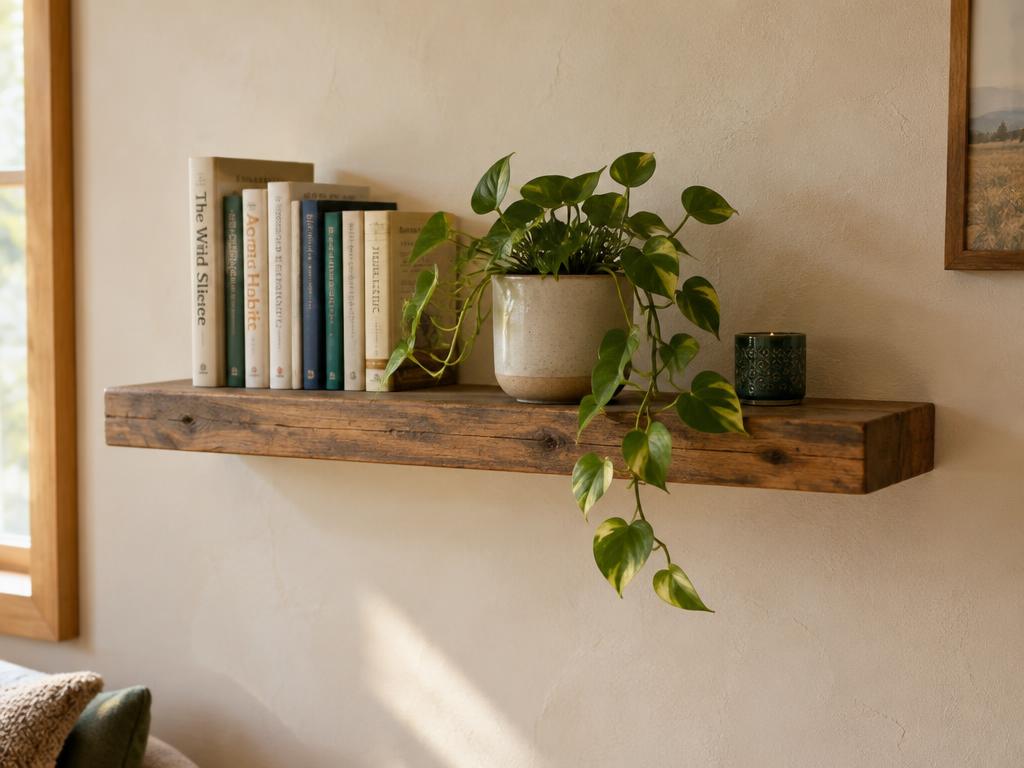
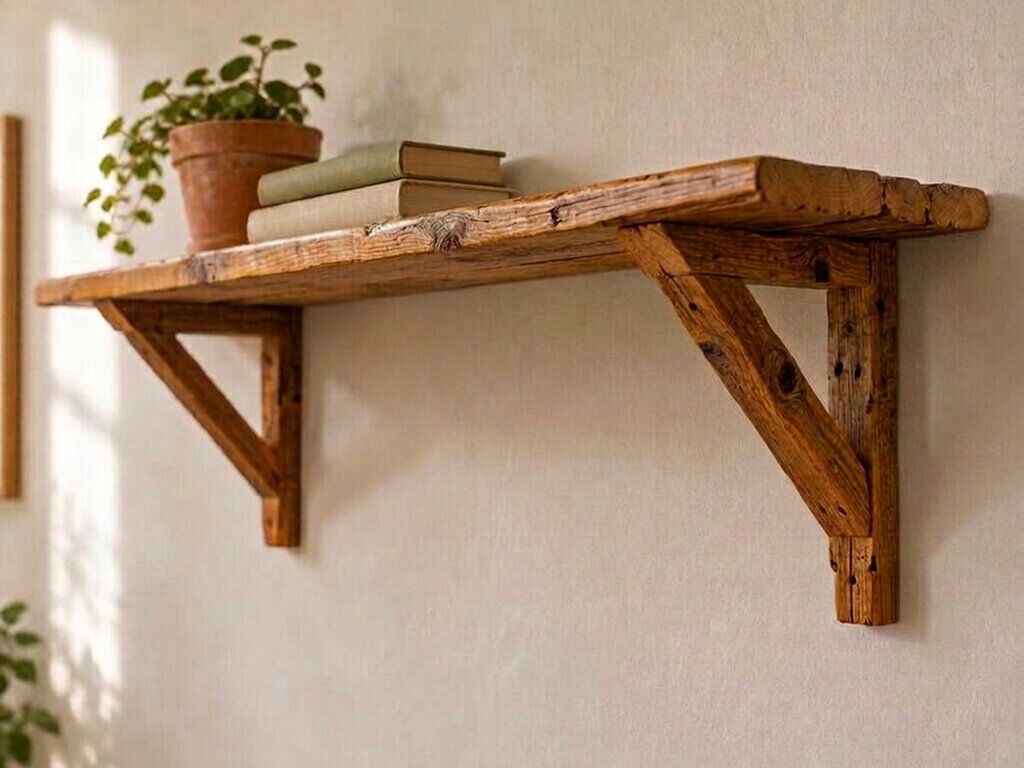
A single wall shelf on brackets.
- Skill
- Beginner
- Tools
- Hand saw, Drill/driver
- Piece length
- Medium lengths (roughly 50cm+)
- Location
- Indoor
- Carries weight
- Yes
- Pallet wood
- Suitable with care
Suits this scrap wood
Why: one good length of board is all you need.
Best
Long boards / offcuts, Old / reclaimed timber, 2×4 / framing lumber
Also works
Plywood, Pallet boards
Materials & finish
- Shelf brackets
- Wall plugs and screws
Finishes that suit it
Natural wood, Rustic
Safety notes
- This carries weight. Only use sound timber without rot, deep splits or large knots at joints.
- Fix into studs or with the right wall plugs.
Reference build
- Overall size
- 600 × 150 mm (~24 × 6 in) shelf, on two brackets
- Time
- About 1 hour
- Skill
- Beginner
Reference stock: one board at least 18 mm thick and 150–200 mm wide. Solid wood or good plywood both work, but don't use chipboard offcuts for anything heavy.
Cut list
| Part | Qty | Length | Notes |
|---|---|---|---|
| Shelf board | 1 | 600 mm (~24 in) | Straightest, flattest board you have |
| Brackets | 2 | — | Bought steel brackets, or make your own (see "Adapting") |
Hardware
- 2 shelf brackets, sized at least two-thirds of the shelf depth
- Wall fixings to suit your wall (see Step 4)
- 4 short wood screws (about 16–20 mm) to fix the shelf to the brackets
- Spirit level, pencil and a stud finder if you have plasterboard walls
Step-by-step
- Pick and check the board. Sight down its length. A slight bow is fine if the bow faces up, because the load will flatten it. Avoid twisted boards.
- Cut and sand. Cut to length, sand the front edge and ends, and round over the sharp corners with sandpaper.
- Plan the bracket positions. Keep the brackets no more than about 60 cm apart for books or heavy items on an 18 mm softwood board. Let the shelf overhang each bracket by no more than about 10–15 cm.
- Choose the right wall fixing. This decides how much the shelf can hold, more than the wood does: Masonry, concrete or hollow block: drill with a masonry bit and use wall plugs with 50 mm+ screws. Plasterboard over timber studs: screw into the studs if they line up with your bracket positions. Plasterboard with no stud: use metal hollow-wall anchors or toggles, and keep the load light.
- Mark and fix the first bracket. Hold it at the height you want, mark the holes, drill and fix it.
- Level and fix the second bracket. Rest the shelf across both brackets with a spirit level on top, mark the second bracket's position, then drill and fix it.
- Fix the shelf to the brackets. Screw up through the bracket holes into the underside of the shelf. Check the screws are shorter than the board is thick.
- Finish. Oil, wax or paint it. For a rustic look, a coat of clear wax on the bare wood is enough.
Adapting it to your scraps
- Thinner board (12–15 mm): keep it short (under 50 cm) with brackets close together, for light items only.
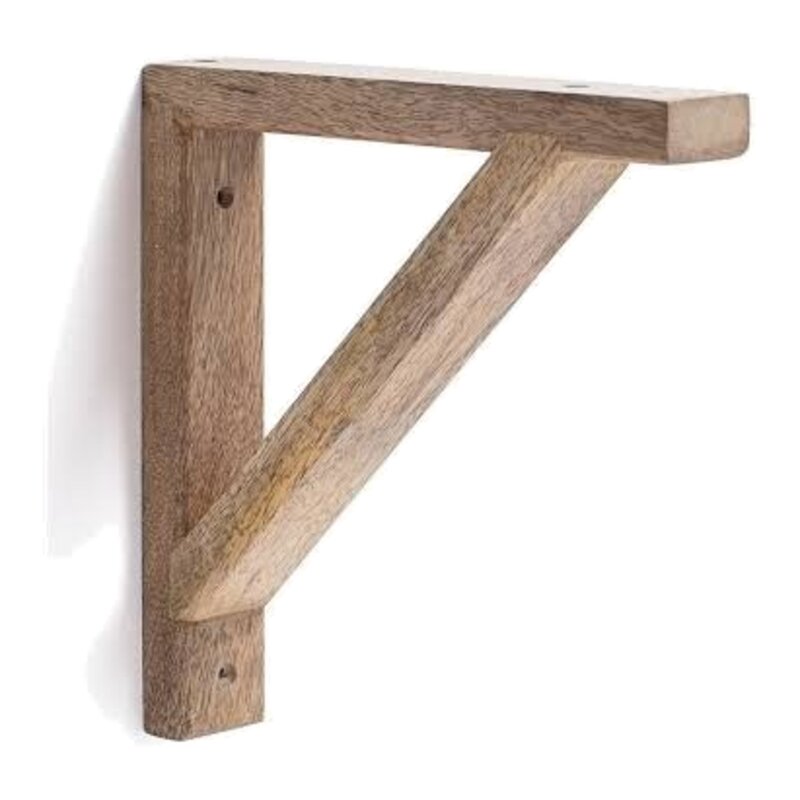
- Make your own brackets: screw two offcuts into an L, then add a diagonal brace cut at 45° on both ends. Glue and screw all joints. This is a good use for 2×2 scraps.
- Floating look: screw a 2×2 batten to the wall and set the shelf on top. This only suits light loads, such as plants and ornaments.
- Rough reclaimed board: plane or sand the top face only, and leave the front edge rough for character.
Common mistakes
- Using plastic plugs in plasterboard. They pull out under load.
- Brackets too far apart, so the shelf sags within weeks.
- Not checking for pipes and cables before drilling. Avoid drilling directly above or below sockets and switches.
- Brackets that are too short for the shelf depth, which makes the shelf tip forward.
FAQ
How thick does wood need to be for a shelf?
18–20 mm is the practical minimum for a general-purpose shelf. Go thicker or put the brackets closer together for books.
How far apart should shelf brackets be?
About 60 cm or less for loaded shelves on 18 mm softwood. Light display shelves can go further.
Can I use pallet wood for a shelf?
Yes, for light-to-medium loads. Pallet boards are often thin (around 15 mm), so keep the span short, or glue two boards face to face.
Not sure it fits your wood?
Answer six quick questions and we'll check it against what you actually have.
Try the selector